Norpsilocin: A Pharmacological Overview of a Psilocybin Metabolite

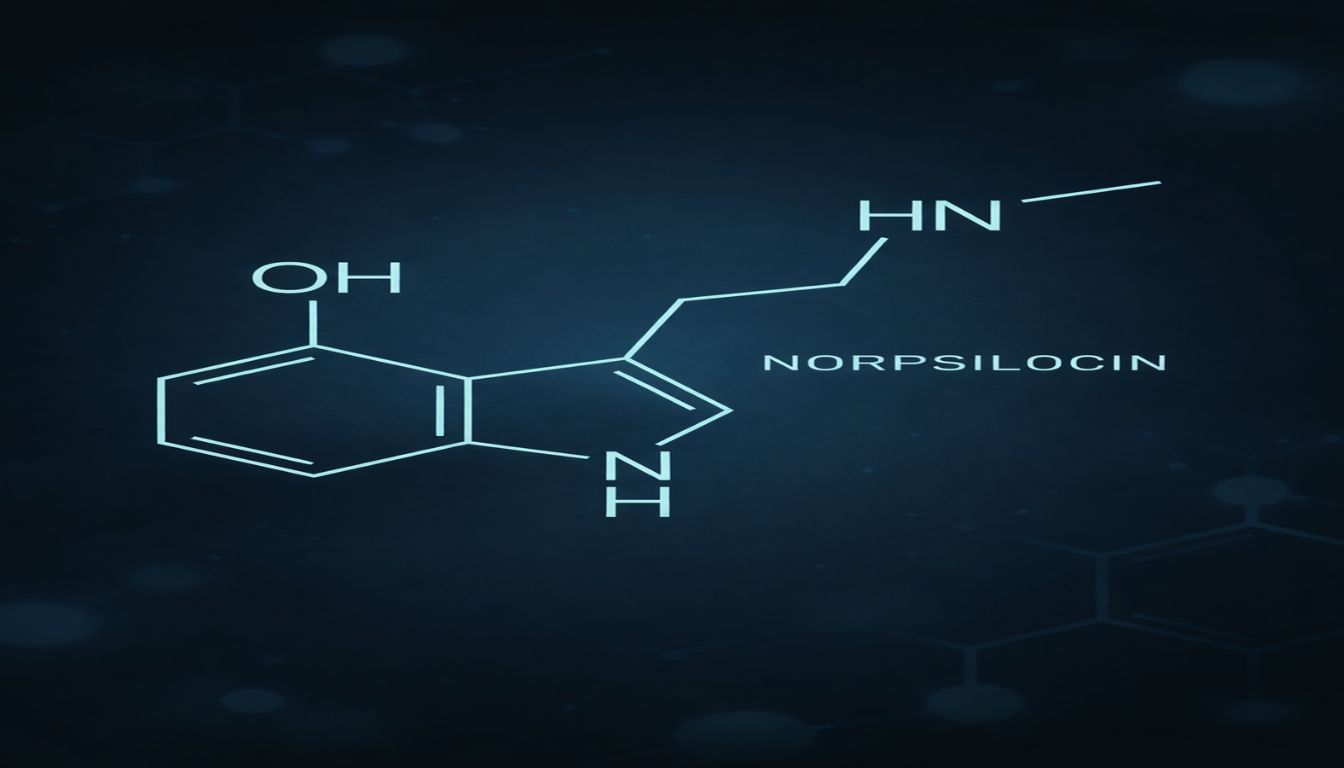
Chemically accurate structural formula of norpsilocin (4-hydroxy-N-methyltryptamine) shown as a scientific molecular diagram on a dark background.

Table of Contents

Norpsilocin is an indoleamine alkaloid and a metabolite of the psychedelic compound psilocybin. While its parent compounds, psilocybin and psilocin, are widely recognized in both scientific and popular discourse, norpsilocin remains a subject primarily confined to specialized pharmacological research. As a structural analog of the neurotransmitter serotonin, it offers a unique case study in psychedelic pharmacology, particularly concerning the subtle molecular differences that dictate a compound’s psychoactive potential. 
 
This article provides a comprehensive, evidence-based overview of norpsilocin, detailing its chemical properties, metabolic formation, receptor interactions, and its significance in the broader context of psychedelic science, while adhering to a strictly academic and neutral tone.
 

What Is Norpsilocin?

 
Norpsilocin, chemically known as 4-hydroxy-N-methyltryptamine (4-HO-NMT), is a naturally occurring tryptamine compound found in trace amounts in certain species of Psilocybe mushrooms . It is most accurately understood as a metabolite of psilocin, which itself is the primary psychoactive metabolite of psilocybin. 
 
When psilocybin is ingested, it undergoes rapid dephosphorylation to become psilocin. Subsequently, psilocin can be metabolized through several pathways, one of which is N-demethylation, resulting in the formation of norpsilocin .
 
As an indoleamine, norpsilocin belongs to a class of compounds characterized by a specific bicyclic structure. This classification places it in the same family as the endogenous neurotransmitter serotonin (5-hydroxytryptamine), which plays a crucial role in regulating mood, cognition, and perception. 
 
The structural similarity between norpsilocin and serotonin is fundamental to its pharmacological activity, as it allows the compound to interact with serotonin receptors in the brain. However, despite this interaction, its profile as a psychoactive agent is markedly different from that of psilocin, a distinction that has made it a molecule of significant interest for researchers seeking to understand the precise structure–activity relationships that govern psychedelic effects.

Chemical Structure and Molecular Characteristics
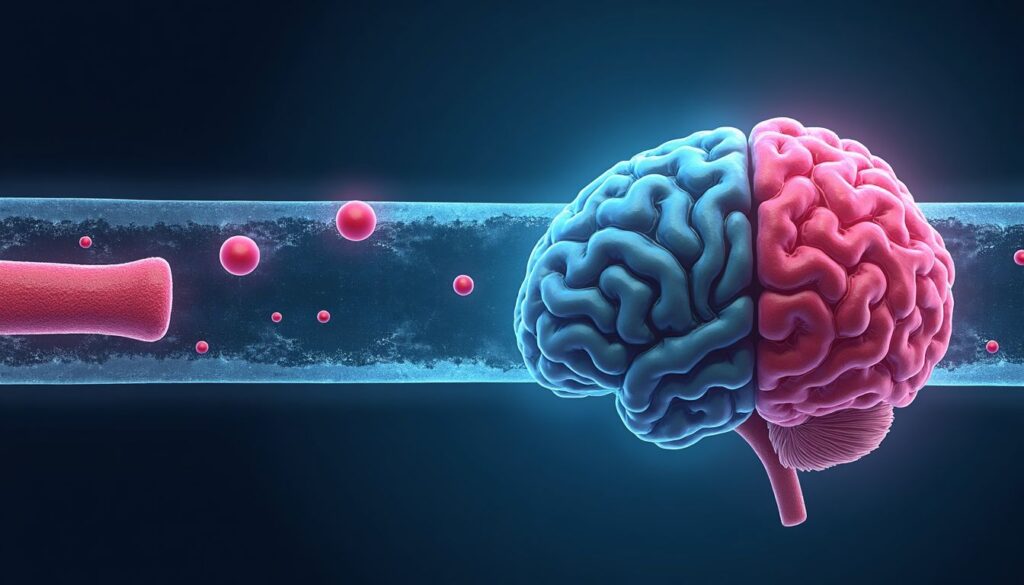
Conceptual illustration of molecules in the bloodstream interacting with the blood–brain barrier and limited central nervous system penetration related to norpsilocin pharmacokinetics.
Conceptual visualization of blood–brain barrier permeability. Although norpsilocin shows strong receptor activity in vitro, its lower lipophilicity likely limits its ability to cross the blood–brain barrier and reach central nervous system targets in significant concentrations.
The molecular distinctions between psilocybin, psilocin, and norpsilocin are subtle yet profound in their pharmacological consequences. Psilocybin (4-phosphoryloxy-N,N-dimethyltryptamine) is a prodrug that contains a phosphate group and a tertiary amine with two methyl groups. Its active metabolite, psilocin (4-hydroxy-N,N-dimethyltryptamine), lacks the phosphate group but retains the tertiary dimethylamine structure. 
 
Norpsilocin is formed through the loss of one of these methyl groups from psilocin, a process known as N-demethylation. This conversion results in a secondary amine (an amine with one methyl group) instead of a tertiary amine.
 
This seemingly minor alteration has significant implications for the molecule’s physicochemical properties, particularly its lipophilicity, which is a key determinant of its ability to cross the blood-brain barrier (BBB). The calculated partition coefficient (cLogP), a measure of lipophilicity, for norpsilocin is approximately 0.9. In contrast, research suggests that the optimal cLogP range for CNS penetration is between 1.5 and 2.7
 
This suggests that norpsilocin may be insufficiently lipophilic to efficiently permeate the BBB and reach its target receptors in the central nervous system. This characteristic is a central theme in the discussion of its limited in vivo activity. The structure–activity relationship (SAR) here is clear: the presence of two methyl groups on the amine, as seen in psilocin, appears critical for conferring the necessary lipophilicity for significant CNS effects.
 

Formation and Metabolic Pathways

 
The metabolic journey from psilocybin to norpsilocin involves a two-step enzymatic process. First, upon ingestion, psilocybin is rapidly converted to psilocin through dephosphorylation, a reaction catalyzed by alkaline phosphatase enzymes found primarily in the intestine and liver . This reaction cleaves the phosphate group from the 4-position of the indole ring, yielding the pharmacologically active psilocin.
 
Once formed, psilocin is subject to further metabolism. While the primary metabolic route for psilocin is glucuronidation—a Phase II metabolism process that makes the molecule more water-soluble for excretion—a secondary, Phase I pathway involves its conversion to norpsilocin. 
 
This transformation occurs via N-demethylation, a reaction primarily catalyzed by the cytochrome P450 enzyme CYP2D6, a critical liver enzyme involved in the metabolism of many drugs . Studies using human liver microsomes and recombinant CYP enzymes have confirmed the role of CYP2D6, and to a lesser extent CYP3A4, in this process. 
 
Norpsilocin has been identified as a metabolite both in vitro and in vivo in mouse models . However, it is important to clarify that this appears to be a minor metabolic pathway in humans, and evidence regarding the formation of norpsilocin in significant quantities in vivo remains limited.
 

Receptor Binding and Pharmacological Activity

 
One of the most intriguing aspects of norpsilocin is the discrepancy between its in vitro and in vivo activity. In vitro studies, which examine the compound’s effects in a controlled laboratory setting outside a living organism, have consistently shown that norpsilocin is a potent agonist at the serotonin 5-HT2A receptor
 
The 5-HT2A receptor is the primary molecular target through which classic psychedelics like psilocin and LSD are understood to produce their characteristic effects on perception and consciousness. In these assays, norpsilocin demonstrates a binding affinity and functional efficacy at the 5-HT2A receptor that is comparable to that of psilocin.
 
Furthermore, research indicates that norpsilocin interacts with a range of other serotonin receptor subtypes, including 5-HT1A, 5-HT2B, and 5-HT2C, as well as other CNS targets like sigma receptors, showing a nonselective binding profile
 
Despite this potent receptor engagement in vitro, studies in animal models have found that norpsilocin is devoid of the classic psychedelic-like behavioral effects, such as the head-twitch response in mice, that are robustly produced by psilocin
 
This evidence strongly suggests that norpsilocin’s lack of psychoactivity is not due to a failure to activate the necessary receptors, but rather a pharmacokinetic issue—specifically, its inability to reach those receptors in the brain in sufficient concentrations.

Norpsilocin in Psychedelic Research

The study of metabolites like norpsilocin is crucial for developing a complete understanding of a drug’s overall pharmacological profile. Researchers investigate metabolites to map the full spectrum of pharmacodynamic and pharmacokinetic processes that occur after a parent compound is administered. 
 
This helps differentiate between the effects caused by the parent drug and those attributable to its various metabolic byproducts. In the case of psilocybin, understanding the activity (or lack thereof) of metabolites like norpsilocin helps to confirm that psilocin is indeed the principal driver of the psychedelic experience.
 
Moreover, the stark contrast between norpsilocin’s in vitro potency and in vivo inactivity provides a valuable lesson in drug design and discovery. It highlights that high receptor affinity alone is not sufficient to predict a compound’s effects in a complex biological system. 
 
Pharmacokinetic factors, such as absorption, distribution, metabolism, and particularly blood-brain barrier permeability, are equally critical. The case of norpsilocin serves as a powerful illustration of this principle within the field of psychedelic pharmacology.
udible banner featuring neuroscience and brain research audiobooks including The Brain That Changes Itself, Why We Sleep, Behave, Incognito, and Livewired.
Curated neuroscience audiobooks from leading researchers and institutions, available through Audible.

Pharmacokinetics and Bioavailability

 
The primary factor limiting norpsilocin’s biological activity in the central nervous system is its poor bioavailability across the blood-brain barrier. As discussed, the N-demethylation of psilocin to norpsilocin reduces the molecule’s lipophilicity. 
 
The tertiary amine of psilocin is thought to be partially shielded by an intramolecular hydrogen bond with the 4-hydroxyl group, which masks its charge and enhances its ability to permeate the lipid-rich BBB . The secondary amine of norpsilocin is less shielded, making the molecule more polar and less capable of passive diffusion into the brain.
 
Consequently, even if norpsilocin is formed in the body, it is unlikely to achieve a plasma concentration sufficient for significant CNS target engagement. The lack of robust human pharmacokinetic data on norpsilocin makes it difficult to state this with absolute certainty, but the available preclinical evidence from animal models and the compound’s known physicochemical properties strongly support this conclusion. Research remains ongoing to fully characterize its metabolic stability and plasma concentration in humans.
 

Research Limitations and Gaps

 
Scientific understanding of norpsilocin is still in its early stages, and the body of evidence is subject to several limitations. The research is characterized by:
 
A small number of dedicated studies: Only a handful of papers have focused specifically on norpsilocin.
 
A predominance of in vitro research: Much of what is known comes from cell-based assays, which may not fully translate to living organisms.
 
A need for more in vivo human data: There is a significant gap in understanding how norpsilocin is formed and processed in humans under real-world conditions.
 
Uncertainty about clinical relevance: It is currently unknown if norpsilocin contributes in any meaningful way to the overall effects of psilocybin, or if it has any therapeutic potential on its own.
Given these gaps, it is essential to use cautious and precise language when discussing the compound. Phrases such as “research suggests” and “evidence remains limited” are appropriate until more definitive data becomes available.
 

Norpsilocin vs. Psilocin: Clarifying Differences

 
To summarize the key distinctions, the following table compares norpsilocin and psilocin across several pharmacological domains.
Feature
Psilocin (4-HO-DMT)
Norpsilocin (4-HO-NMT)
Chemical Structure
Tertiary amine (N,N-dimethyl)
Secondary amine (N-methyl)
Lipophilicity (cLogP)
Higher; sufficient for BBB penetration
Lower; likely insufficient for significant BBB penetration
5-HT2A Receptor Activity
Potent agonist in vitro and in vivo
Potent agonist in vitro, but inactive in vivo
CNS Psychoactivity
Produces robust psychedelic effects
Devoid of psychedelic-like effects in animal models
Metabolic Stability
Metabolized via glucuronidation and N-demethylation
A metabolite of psilocin;
1. What is norpsilocin?

Norpsilocin is a metabolite of psilocin formed through a process called N-demethylation. Chemically known as 4-hydroxy-N-methyltryptamine (4-HO-NMT), norpsilocin belongs to the indoleamine family and is structurally related to serotonin. It is primarily studied in pharmacological research rather than clinical settings.

Current research suggests that norpsilocin does not produce psychedelic-like effects in vivo. Although norpsilocin shows strong receptor activity in laboratory assays, its limited ability to cross the blood–brain barrier likely prevents significant central nervous system effects.

Norpsilocin is formed when psilocin undergoes N-demethylation, a metabolic reaction primarily catalyzed by the liver enzyme CYP2D6. This represents a secondary metabolic pathway following the conversion of psilocybin into psilocin.

Yes. Norpsilocin is a potent agonist at the serotonin 5-HT2A receptor in vitro. It also interacts with other serotonin receptor subtypes, including 5-HT1A and 5-HT2C. However, receptor binding alone does not guarantee psychoactive effects in living organisms.

The discrepancy is likely due to pharmacokinetics. Norpsilocin has lower lipophilicity than psilocin, which reduces its ability to cross the blood–brain barrier. As a result, it may not reach central nervous system targets in sufficient concentrations to produce measurable effects.

Norpsilocin has been detected in trace amounts in certain Psilocybe species. However, it is primarily discussed as a metabolite of psilocin rather than as a major naturally occurring compound.

The enzyme CYP2D6 is responsible for catalyzing the N-demethylation of psilocin into norpsilocin. Genetic differences in CYP2D6 activity between individuals may influence the extent of this metabolic pathway, although human data remain limited.

Current evidence suggests that norpsilocin is unlikely to contribute significantly to the psychedelic effects of psilocybin. Psilocin remains the primary active compound responsible for central nervous system activity.

The key structural difference is that psilocin contains a tertiary amine (N,N-dimethyl), while norpsilocin contains a secondary amine (N-methyl). This small change affects lipophilicity and blood–brain barrier permeability, which significantly alters pharmacological outcomes.

Norpsilocin is valuable for understanding structure–activity relationships in psychedelic pharmacology. It demonstrates that strong receptor binding does not automatically translate to psychoactive effects, highlighting the importance of pharmacokinetics in drug design.

Glossary Summary

In summary, norpsilocin is a metabolite of psilocin formed through N-demethylation, a process mediated by the CYP2D6 enzyme. It is a potent agonist at the 5-HT2A receptor in vitro, with a binding affinity comparable to psilocin. However, due to its lower lipophilicity and poor blood-brain barrier permeability, it does not produce psychedelic-like effects in vivo. Its study is important for understanding the structure-activity relationships of psychedelic compounds, but much remains unknown about its pharmacokinetics and relevance in humans.

Educational Disclaimer


This article is intended for educational and informational purposes only. It does not constitute medical advice, nor does it endorse or recommend the use of any substance. The content herein discusses pharmacological research and is not intended to guide personal use, treatment, or any other related activities.

References

Share this post :

Facebook
Twitter
LinkedIn
Pinterest
Popular Product