The Importance of Scientific Literacy in Psychedelic Discussions
Navigating the landscape of psychedelic science requires strong scientific literacy to counter growing misinformation. Critically evaluating claims is essential. This involves questioning the source and evidence, distinguishing between peer-reviewed research and anecdotal reports.
[Internal link: Glossary: Key Terms in Psychedelic Science]
Understanding the hierarchy of evidence—where a randomized controlled trial carries more weight than a personal anecdote—is also crucial. Finally, it’s important to practice healthy skepticism (questioning claims and asking for evidence) rather than dismissal (rejecting ideas without consideration). This approach fosters a culture of curiosity that values evidence over assumption.
Summary — Respecting Belief Without Confusing It With Evidence
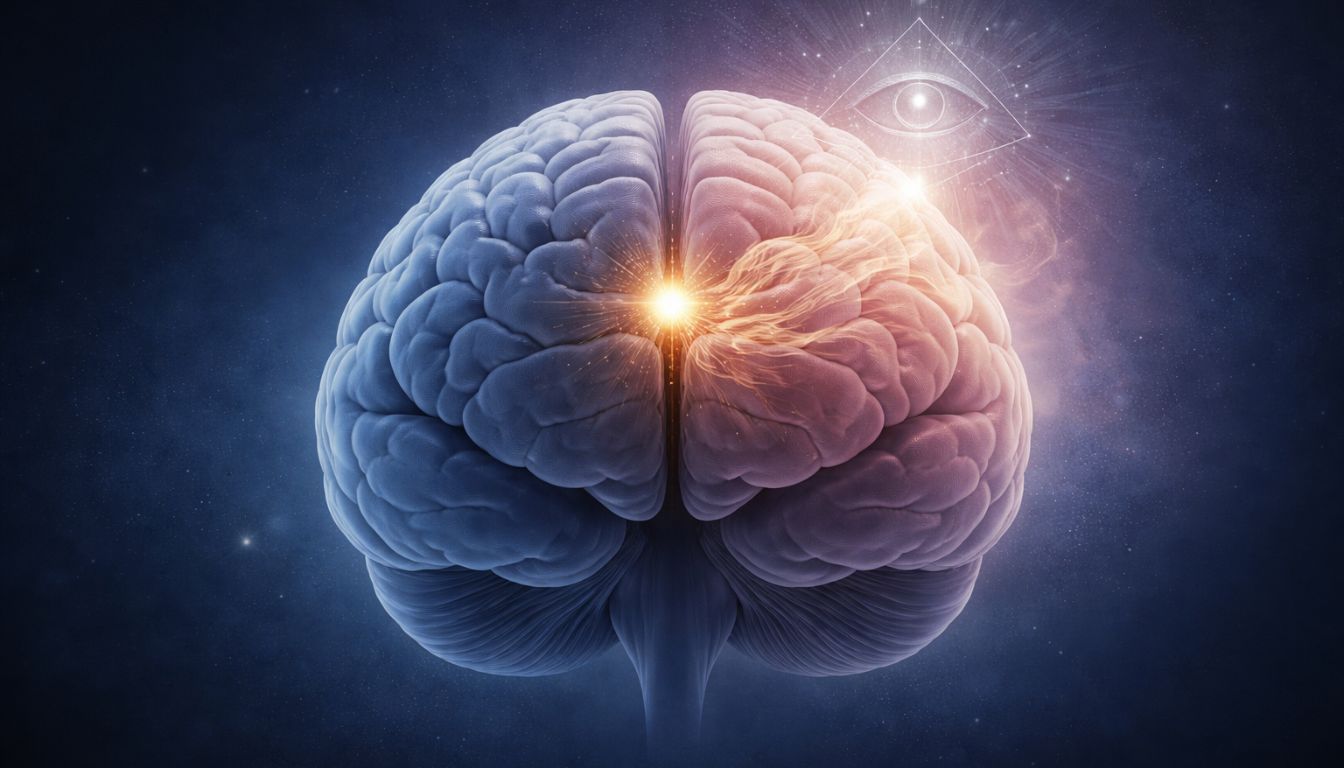
In summary, the popular narratives that link magic mushrooms to the activation of a mystical “third eye” or to dramatic life extension are not supported by the current body of scientific evidence. These ideas are powerful and appealing, but they represent a confusion between symbolic, spiritual beliefs and the empirical findings of biology and neuroscience.
Science provides a clear, albeit more modest, picture:
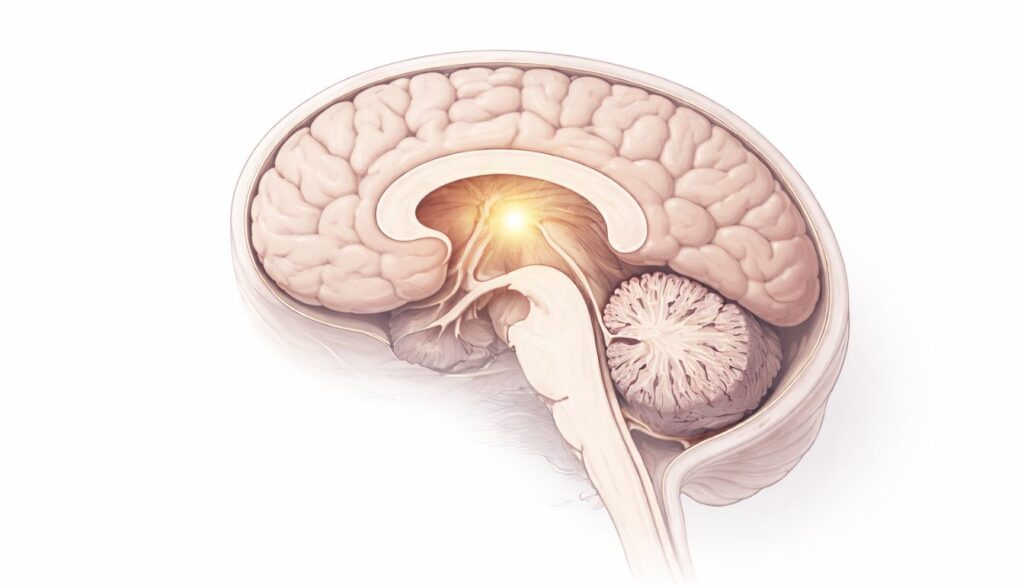
•What Science Supports: The pineal gland is a crucial endocrine organ responsible for producing melatonin and regulating our circadian rhythms. Psilocybin exerts its profound effects by binding to serotonin receptors and altering brain network dynamics, a process that can promote neuroplasticity.
•What Remains Unproven: There is no credible scientific evidence that the pineal gland secretes DMT, that psilocybin “activates” it, or that magic mushrooms can reverse the fundamental processes of cellular aging to extend lifespan.
Establishing and maintaining a clear boundary between belief and evidence is not an act of dismissal but one of clarity and intellectual rigor. It allows us to respect the rich history of human spiritual traditions without misrepresenting the findings of science.
As research into psychedelics continues to advance, it is more important than ever to ground our understanding in scientific literacy, to evaluate claims critically, and to prioritize evidence over assumption. This approach ensures a responsible and productive conversation about both the potential and the limitations of these powerful compounds.
Sources & Further Reading
1.Arendt, J., & Aulinas, A. (2022). Physiology of the Pineal Gland and Melatonin. In Endotext. MDText.com, Inc. Retrieved from https://www.ncbi.nlm.nih.gov/books/NBK550972/
2.Nichols, D. E. (2018 ). N,N-dimethyltryptamine and the pineal gland: Separating fact from myth. Journal of Psychopharmacology, 32(1), 30–36. https://doi.org/10.1177/0269881117736919
3.Ilahi, S., Beri, A., & Ilahi, T. B. (2023 ). Physiology, Pineal Gland. In StatPearls. StatPearls Publishing. Retrieved from https://www.ncbi.nlm.nih.gov/books/NBK525955/
4.Borjigin, J., Li, X., & Snyder, S. H. (2011 ). The circadian regulation of pineal gland rhythmicity. Molecular and Cellular Endocrinology, 349(1), 13-19. https://doi.org/10.1016/j.mce.2011.07.009
5.Tan, D. X., Xu, B., Zhou, X., & Reiter, R. J. (2018 ). Pineal Calcification, Melatonin Production, Aging, Associated Health Consequences and Rejuvenation of the Pineal Gland. Molecules, 23(2), 301. https://doi.org/10.3390/molecules23020301
6.WebMD. (2024, October 15 ). What to Know About Calcification of the Pineal Gland. Retrieved from https://www.webmd.com/sleep-disorders/what-to-know-about-calcification-of-the-pineal-gland
7.Smausz, R., Deakin, J. F. W., & Harmer, C. J. (2022 ). Neural mechanisms underlying psilocybin’s therapeutic potential. Trends in Pharmacological Sciences, 43(8), 657-660. https://doi.org/10.1016/j.tips.2022.05.004
8.Schellnegger, M., Lin, T., & Linnerth-Petrik, A. (2024 ). Unlocking longevity: the role of telomeres and its targeting strategies in cellular senescence and aging. Cell & Bioscience, 14(1), 49. https://doi.org/10.1186/s13578-024-01229-4
9.Vaiserman, A., & Krasnienkov, D. (2021 ). Telomere Length as a Marker of Biological Age: State-of-the-Art, Open Issues, and Future Perspectives. Frontiers in Genetics, 11, 630186. https://doi.org/10.3389/fgene.2020.630186
10.Johns Hopkins Medicine. (2023, May 4 ). Long Telomeres, the Endcaps on DNA, Not the Fountain of Youth Once Thought; Scientists May Now Know Why. Retrieved from https://www.hopkinsmedicine.org/news/newsroom/news-releases/2023/05/long-telomeres-the-endcaps-on-dna-not-the-fountain-of-youth-once-thought–scientists-may-now-know-why
11.Rodríguez-Rodero, S., Fernández-Morera, J. L., Menéndez-Torre, E., & Calvanese, V. (2011 ). Aging genetics and aging. Aging and Disease, 2(3), 186–195.
12.Palmer, A. K., & Jensen, M. D. (2022). Metabolic changes in aging humans: current evidence and future directions. Journal of Clinical Investigation, 132(20), e158451. https://doi.org/10.1172/JCI158451
13.Calder, A. E., & Hasler, G. (2023 ). Towards an understanding of psychedelic-induced neuroplasticity. Neuropsychopharmacology, 48(1), 104–112. https://doi.org/10.1038/s41386-022-01389-z
 Educational Disclaimer
This article is for educational and informational purposes only and does not constitute medical, psychological, or spiritual advice. The content is intended to promote scientific literacy and critical thinking.
The cultural, spiritual, or symbolic beliefs discussed are presented for contextual understanding and are not endorsed as scientific evidence.
Any discussion of scientific research or biological mechanisms does not imply or endorse the use, benefit, safety, or suitability of any substance. Always consult with a qualified healthcare professional for any health-related concerns.