Table of Contents
What Is Serotonin Syndrome?
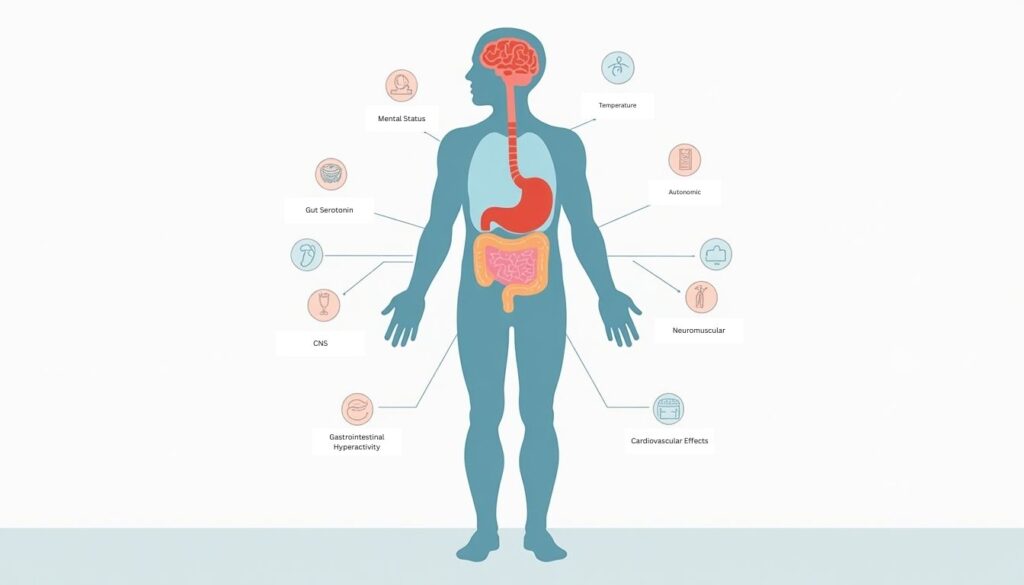
The Role of Serotonin in the Nervous System
How Serotonin Syndrome Develops (Mechanisms)
Mechanism of Action | Description | Examples of Associated Drug Classes |
Increased Serotonin Synthesis | Providing the precursor for serotonin production. | L-tryptophan supplements |
Inhibition of Serotonin Reuptake | Blocking the serotonin transporter (SERT) protein, which prevents serotonin from being cleared from the synapse. | SSRIs, SNRIs, Tricyclic Antidepressants, Tramadol, Dextromethorphan |
Inhibition of Serotonin Metabolism | Blocking the monoamine oxidase (MAO) enzyme, which breaks down serotonin in the presynaptic neuron. | MAOIs (e.g., phenelzine, linezolid), Methylene Blue |
Increased Serotonin Release | Promoting the release of stored serotonin from vesicles into the synapse. | MDMA (Ecstasy), Amphetamines |
Direct Receptor Agonism | Directly stimulating postsynaptic serotonin receptors. | Triptans (5-HT1B/1D agonists), Buspirone (5-HT1A partial agonist), certain psychedelics (5-HT2A agonists) |
Clinical Features Described in Medical Literature
Substances Associated in Case Literature
Serotonin Syndrome vs Other Conditions
Condition | Key Differentiating Features |
Neuroleptic Malignant Syndrome (NMS) | Caused by dopamine antagonists (antipsychotics). Characterized by slower onset (days), “lead-pipe” rigidity, and hyporeflexia (decreased reflexes). |
Anticholinergic Toxicity | Caused by anticholinergic drugs. Presents with dry skin and mucous membranes, urinary retention, and absent bowel sounds, which are not typical of serotonin syndrome. |
Malignant Hyperthermia | A rare genetic disorder triggered by specific anesthetic agents. Onset is rapid during or after anesthesia. |
Research Gaps and Ongoing Debate
Conclusion

What is serotonin syndrome?
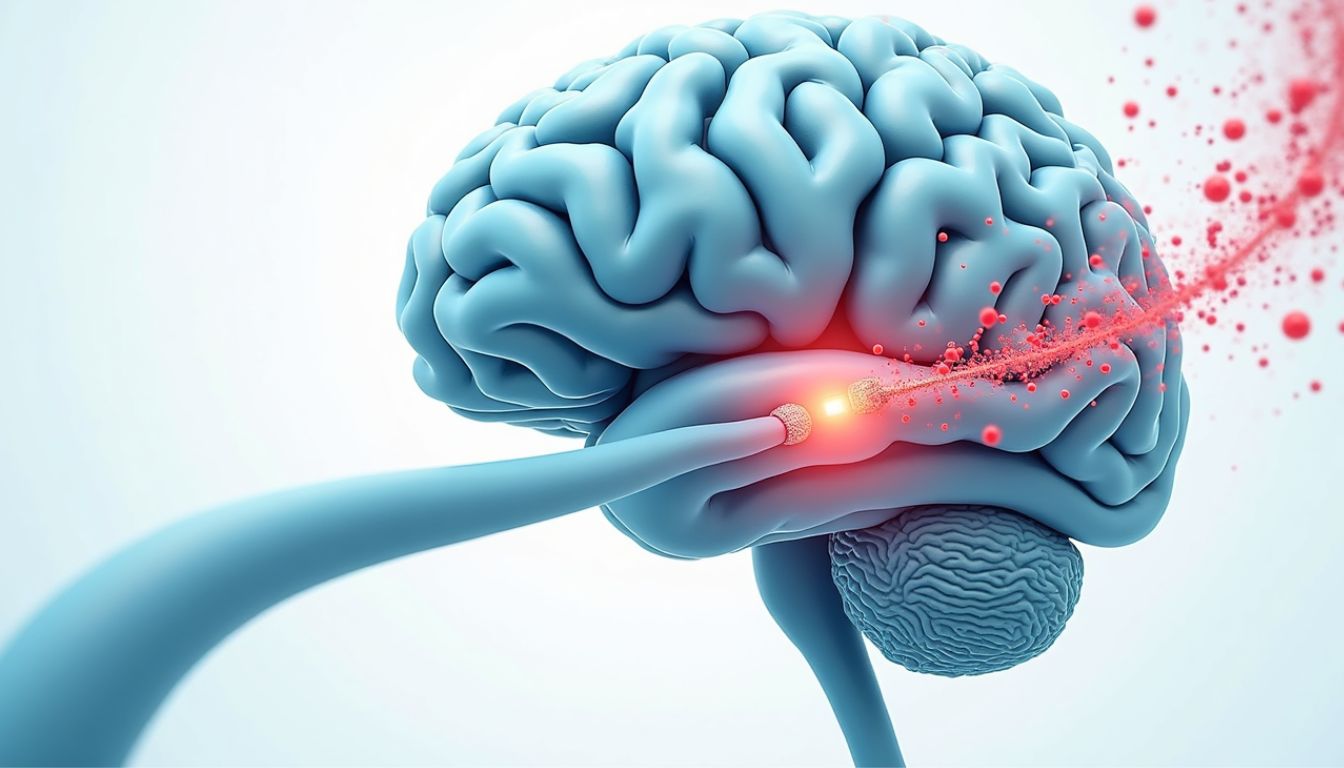
Serotonin syndrome is a toxic condition caused by excessive serotonergic activity in the central and peripheral nervous systems. It most often occurs due to medication interactions, overdose, or combining multiple drugs that increase serotonin levels.
What causes serotonin syndrome?
Serotonin syndrome is typically caused by combining two or more serotonergic agents, such as antidepressants, MAO inhibitors, certain opioids, or recreational substances. It can also occur from high doses of a single serotonergic drug.
Which serotonin receptors are involved in serotonin syndrome?
Overstimulation of the 5-HT2A receptor is believed to play a central role in the severe neuromuscular and autonomic symptoms of serotonin syndrome, including hyperthermia and muscle rigidity.
What are the main symptoms of serotonin syndrome?
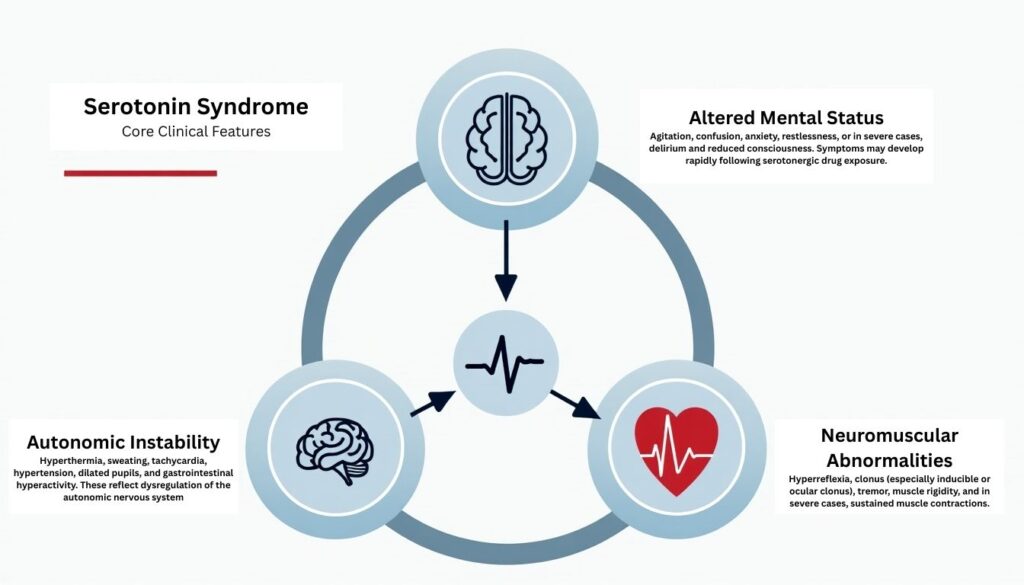
Serotonin syndrome is characterized by a triad of symptoms:
Altered mental status (confusion, agitation)
Autonomic instability (tachycardia, sweating, fever)
Neuromuscular abnormalities (tremor, clonus, hyperreflexia)
How quickly does serotonin syndrome develop?
Serotonin syndrome typically develops rapidly — often within hours of taking a new medication, increasing a dose, or combining serotonergic substances. This rapid onset helps distinguish it from similar conditions.
Is serotonin syndrome life-threatening?
Yes. Severe serotonin syndrome can become life-threatening, particularly when hyperthermia, severe muscle rigidity, or cardiovascular instability occur. Prompt medical evaluation is essential.
How is serotonin syndrome diagnosed?
Serotonin syndrome is diagnosed clinically using established criteria, most commonly the Hunter Serotonin Toxicity Criteria. There is no specific laboratory test to confirm the condition.
What is the difference between serotonin syndrome and neuroleptic malignant syndrome (NMS)?
Serotonin syndrome is caused by excessive serotonin activity and typically presents with hyperreflexia and clonus. Neuroleptic malignant syndrome is caused by dopamine blockade and is characterized by severe rigidity and slower onset.
Can over-the-counter or herbal products cause serotonin syndrome?
Yes. Products such as dextromethorphan (in cough medications) and St. John’s Wort can increase serotonin levels and contribute to serotonin syndrome, especially when combined with prescription antidepressants.
Can serotonin syndrome occur from psychedelics?
Certain psychedelics act on serotonin receptors, particularly 5-HT2A. While classic psychedelics alone rarely cause serotonin syndrome, the risk increases when combined with other serotonergic medications, especially MAO inhibitors or SSRIs.
Can mild serotonin syndrome resolve on its own?
Mild cases of serotonin syndrome may improve once the offending medication is discontinued under medical supervision. However, symptoms can escalate rapidly, and any suspected case requires professional evaluation to determine severity and appropriate management.
Who is at higher risk for serotonin syndrome?
Individuals taking multiple serotonergic medications, higher doses of antidepressants, monoamine oxidase inhibitors (MAOIs), certain opioids, or recreational serotonergic substances are at increased risk. Older adults and patients managed by multiple prescribers may also face higher risk due to polypharmacy.
How is serotonin syndrome treated in a hospital setting?
Treatment focuses on discontinuing serotonergic agents, stabilizing vital signs, managing agitation, and controlling hyperthermia. In severe cases, sedation, intravenous fluids, and supportive intensive care may be required. Management is based on symptom severity rather than a single laboratory value.
How long does serotonin syndrome last?
Symptoms often begin within hours of exposure and may resolve within 24–72 hours after discontinuation of the causative agents. More severe cases may require longer monitoring and supportive care. Duration depends on the specific drugs involved and their half-lives.
Is serotonin syndrome preventable?
Serotonin syndrome is largely preventable through careful medication management, awareness of drug interactions, and appropriate dose adjustments. Healthcare providers typically assess serotonergic burden before prescribing medications known to increase serotonin activity.
Important Medical Disclaimer
References
[1]: Simon, L. V., Torrico, T. J., & Keenaghan, M. (2024). Serotonin Syndrome. In StatPearls. StatPearls Publishing. URL: https://www.ncbi.nlm.nih.gov/books/NBK482377/
[2]: Boyer, E. W., & Shannon, M. (2005 ). The serotonin syndrome. The New England Journal of Medicine, 352(11), 1112–1120. URL: https://www.nejm.org/doi/full/10.1056/NEJMra041867
[3]: Isbister, G. K., & Buckley, N. A. (2005 ). The pathophysiology of serotonin toxicity in animals and humans: implications for diagnosis and treatment. Clinical Neuropharmacology, 28(5), 205-214.
[4]: Martin, A. M., & Young, R. L. (2011). The expanding role of the serotonin secreting cell in the gut. International journal of biochemistry & cell biology, 43(4), 547-550.
[5]: Barnes, N. M., & Sharp, T. (1999). A review of central 5-HT receptors and their function. Neuropharmacology, 38(8), 1083-1152.
[6]: Stahl, S. M. (2013). Stahl’s essential psychopharmacology: neuroscientific basis and practical applications (4th ed.). Cambridge university press.
[7]: Foong, A. L., Grindrod, K. A., Patel, T., & Kellar, J. (2018). Demystifying serotonin syndrome (or serotonin toxicity). Canadian Family Physician, 64(10), 720–727.
[8]: U.S. Food and Drug Administration. (2017). FDA Drug Safety Communication: Updated information about drug interaction between linezolid (Zyvox) and serotonergic psychiatric medications. URL: https://www.fda.gov/drugs/drug-safety-and-availability/fda-drug-safety-communication-updated-information-about-drug-interaction-between-linezolid-zyvox-and
[9]: U.S. Food and Drug Administration. (2017 ). FDA Drug Safety Communication: Updated information about drug interaction between methylene blue and serotonergic psychiatric medications. URL: https://www.fda.gov/drugs/drug-safety-and-availability/fda-drug-safety-communication-updated-information-about-drug-interaction-between-methylene-blue
[10]: Dunkley, E. J., Isbister, G. K., Sibbritt, D., Dawson, A. H., & Whyte, I. M. (2003 ). The Hunter Serotonin Toxicity Criteria: simple and accurate diagnostic decision rules for serotonin toxicity. QJM: An International Journal of Medicine, 96(9), 635–642.
[11]: World Health Organization. (2023). WHO Pharmacovigilance Database. Uppsala Monitoring Centre.
[12]: Perry, P. J., & Wilborn, C. A. (2012). Serotonin syndrome vs neuroleptic malignant syndrome: a contrast of causes, diagnoses, and management. Annals of Clinical Psychiatry, 24(2), 155–162.
[13]: Prakash, S., Patel, V., Kakked, S., Patel, I., & Yadav, R. (2015). Mild serotonin syndrome: A report of 12 cases. Annals of Indian Academy of Neurology, 18(2), 226–230.
[14]: Scotton, W. J., Hill, L. J., Williams, A. C., & Barnes, N. M. (2019). Serotonin Syndrome: Pathophysiology, Clinical Features, Management, and Potential Future Directions. International Journal of Tryptophan Research, 12, 1178646919873925.