Serotonin and Serotonin Receptors: Biology, Metabolism, and Brain Function

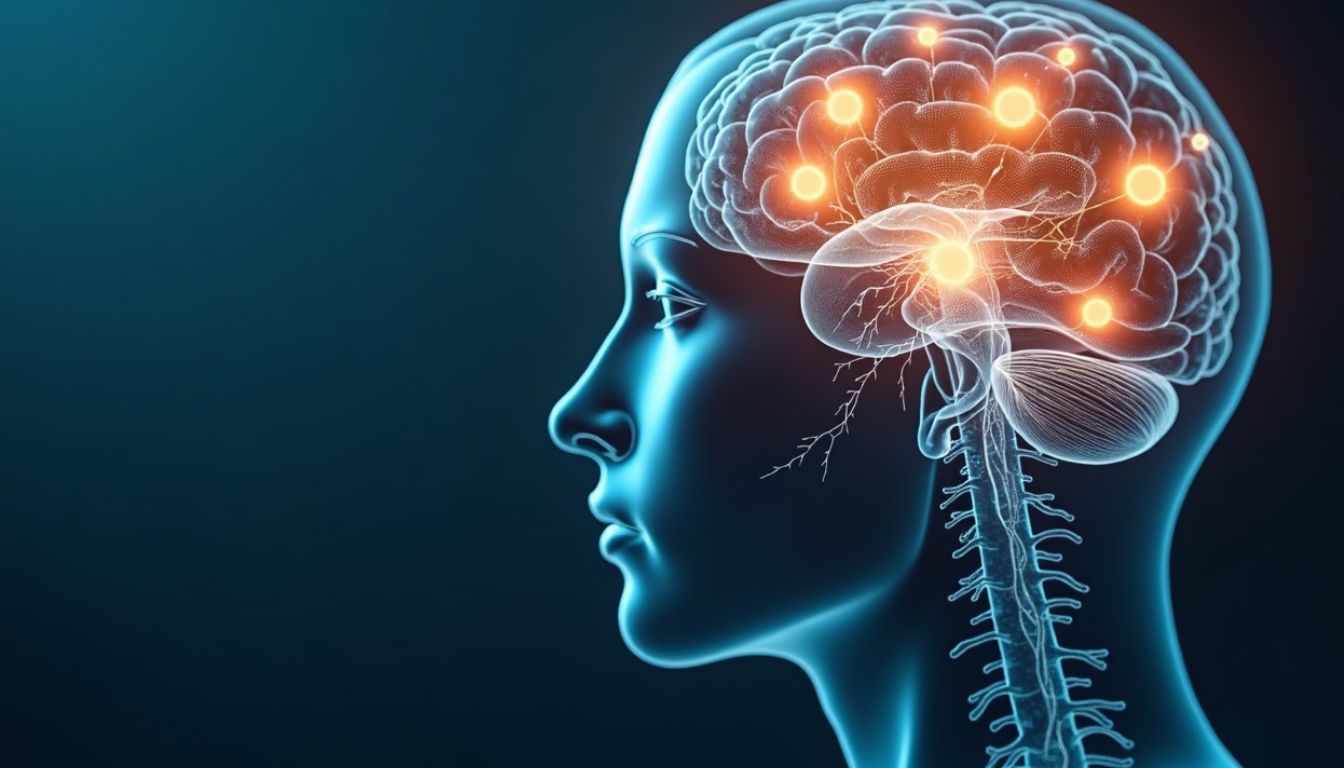
Digital illustration of the human brain highlighting serotonin signaling pathways and receptor activity in cortical regions.

Table of Contents

What Is Serotonin?

Serotonin, chemically known as 5-hydroxytryptamine (5-HT), is a crucial monoamine neurotransmitter that plays a multifaceted role in both the central and peripheral nervous systems. Derived from the essential amino acid tryptophan, serotonin is integral to a vast array of physiological and psychological processes
 
While it is widely recognized for its functions within the brain, regulating mood, sleep, and appetite, the majority of the body’s serotonin is actually produced and utilized in the gut. This highlights its significant role in the gut-brain axis, a complex communication network that links the emotional and cognitive centers of the brain with peripheral intestinal functions
 
As a fundamental signaling molecule, serotonin’s influence extends from the microscopic level of synaptic transmission to the macroscopic level of systemic bodily regulation, making it a key area of focus in neuroscience and medicine.
 

How Serotonin Is Synthesized

 
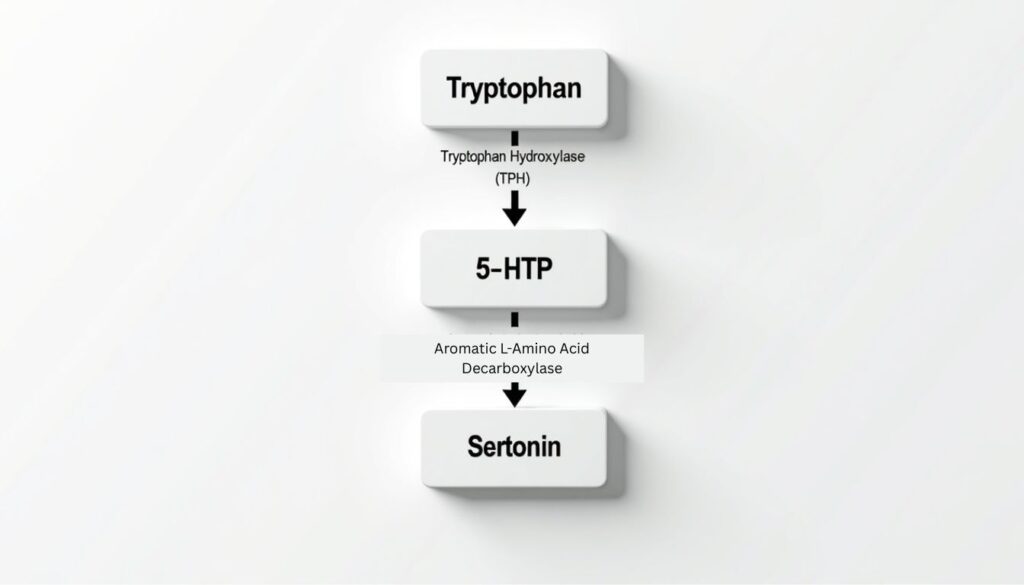
The biosynthesis of serotonin is a two-step enzymatic process that begins with the essential amino acid L-tryptophan, obtained from the diet. In the first and rate-limiting step, the enzyme tryptophan hydroxylase (TPH) catalyzes the conversion of tryptophan to an intermediate molecule called 5-hydroxytryptophan (5-HTP) . Subsequently, 5-HTP is rapidly converted into serotonin (5-HT) by the enzyme aromatic L-amino acid decarboxylase (AADC).
 
Interestingly, the synthesis of serotonin occurs in two distinct and largely independent systems within the body, a division necessitated by the fact that serotonin cannot cross the blood-brain barrier. Central serotonin synthesis occurs primarily in the serotonergic neurons of the raphe nuclei, located in the brainstem, and is dependent on the TPH2 isoform of the enzyme. 
 
In contrast, peripheral serotonin synthesis predominantly takes place in the enterochromaffin cells of the gut and is mediated by the TPH1 isoform . This peripheral system is responsible for producing over 90% of the body’s total serotonin, which plays a vital role in regulating gut motility and other systemic functions.
Diagram showing serotonin synthesis pathway from tryptophan to 5-HTP and serotonin via tryptophan hydroxylase and aromatic L-amino acid decarboxylase.
Serotonin is synthesized in a two-step enzymatic process beginning with tryptophan and producing 5-HT (serotonin) through TPH and AADC activity.

Serotonin Receptors: Families and Functions
Serotonin exerts its diverse effects by binding to a wide array of specific protein targets known as serotonin receptors, or 5-HT receptors. These receptors are found on the surface of cells throughout the central and peripheral nervous systems. To date, researchers have identified seven distinct families of serotonin receptors, labeled 5-HT1 through 5-HT7, which are further subdivided into at least 15 different subtypes
 
This remarkable diversity allows serotonin to produce a wide range of, and sometimes opposing, physiological and neurological effects.
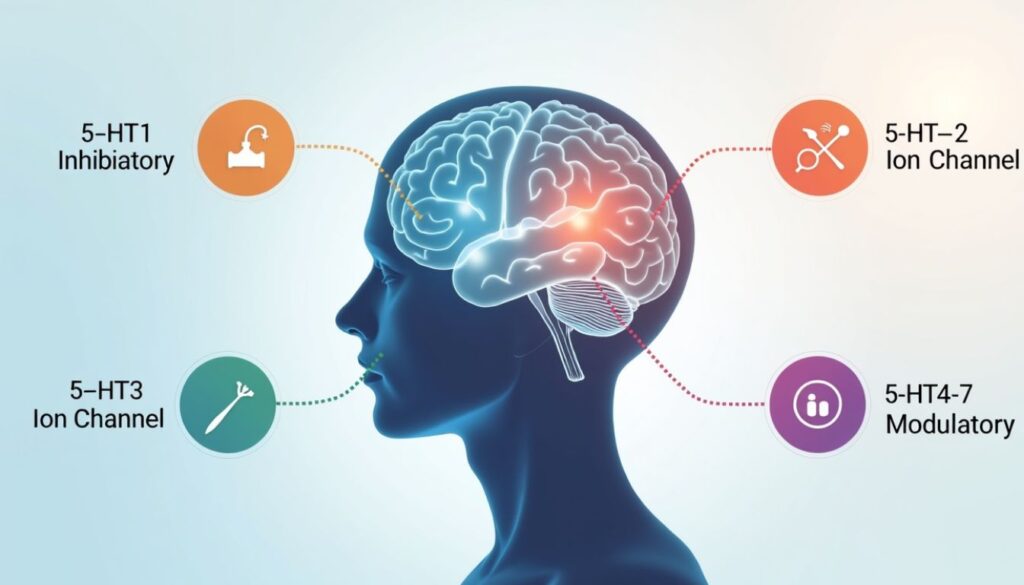
With the notable exception of the 5-HT3 receptor, which is a ligand-gated ion channel, all other known serotonin receptors are G-protein-coupled receptors (GPCRs)
 
When serotonin binds to a GPCR, it initiates a cascade of intracellular signaling events through second messengers, which can lead to either excitatory or inhibitory effects on the neuron, depending on the specific receptor subtype and the G-protein it is coupled to. For example, 5-HT1 receptors typically couple to Gi/o proteins, which inhibit adenylyl cyclase and decrease cyclic AMP (cAMP) levels, resulting in inhibitory effects.
 
Conversely, 5-HT2 receptors couple to Gq proteins, activating phospholipase C and increasing intracellular calcium levels, thereby producing excitatory effects. The 5-HT4, 5-HT6, and 5-HT7 receptors, meanwhile, couple to Gs proteins, which stimulate adenylyl cyclase and increase cAMP production.
 
The distribution of these receptor subtypes varies significantly throughout the brain, which contributes to their distinct functional roles. Three of the most extensively studied subtypes include:
Among the most extensively studied subtypes are the 5-HT1A receptors, which are highly concentrated in brain regions like the hippocampus, amygdala, and raphe nuclei. 
 
Functioning as inhibitory autoreceptors on serotonin neurons themselves, they play a crucial role in regulating serotonin synthesis and release, thereby creating a negative feedback loop. Consequently, their activation is generally associated with anxiolytic (anxiety-reducing) and antidepressant effects. In contrast, 5-HT2A receptors are widely distributed throughout the cerebral cortex. 
 
These excitatory receptors are involved in complex processes such as learning, memory, and cognition. Notably, they are the primary target of classical psychedelic compounds like LSD and psilocybin, and their activation is linked to profound changes in perception and consciousness .
 
Finally, the 5-HT3 receptors stand out as the only ion channels in the serotonin receptor family, mediating rapid, excitatory neurotransmission. They are densely located in areas of the brainstem that control vomiting, as well as in the gastrointestinal tract, making them a key target for anti-nausea medications.
 
Beyond these well-characterized subtypes, other receptor families contribute to the complexity of serotonergic signaling. The 5-HT4 receptors, for instance, are found in the hippocampus and gastrointestinal tract, where they facilitate learning and memory processes and regulate gut motility, respectively. 
 
The 5-HT7 receptors are implicated in circadian rhythm regulation, thermoregulation, and mood modulation. Each receptor subtype exhibits a unique pharmacological profile, regional distribution, and downstream signaling cascade, which collectively enable serotonin to fine-tune neural activity across diverse brain circuits. 
 
This complexity of serotonin receptor signaling, with its varied families, subtypes, and signal transduction pathways, underscores the sophisticated and nuanced role that serotonin plays in brain function and overall physiology.
Illustration of serotonin receptor families in the brain including inhibitory 5-HT1 receptors, excitatory 5-HT2 receptors, ion channel 5-HT3 receptors, and modulatory 5-HT4-7 receptors.
Serotonin exerts its effects through multiple receptor families, each producing distinct inhibitory, excitatory, or modulatory signaling responses.

How Serotonin Is Metabolized and Broken Down

To ensure precise control over neurotransmission, the action of serotonin in the synaptic cleft is tightly regulated. The termination of serotonergic signaling primarily occurs through two key mechanisms: reuptake and enzymatic degradation. 
 
For instance, the primary mechanism for clearing serotonin from the synapse is its reuptake into the presynaptic neuron by the serotonin transporter (SERT), a specialized protein embedded in the neuronal membrane. Importantly, this process not only recycles the neurotransmitter for future use but also serves as a critical regulator of extracellular serotonin levels.
 
Once transported back into the presynaptic neuron, or if it remains in the synapse, serotonin is broken down by the enzyme monoamine oxidase (MAO), with the MAO-A isoform being of particular importance. MAO converts serotonin into an inactive metabolite called 5-hydroxyindoleacetic acid (5-HIAA), which is then excreted from the body, primarily in the urine
 
The measurement of 5-HIAA levels in a 24-hour urine sample is often used as a proxy to estimate the body’s overall serotonin turnover. The liver also plays a significant role in metabolizing peripheral serotonin before it can enter the general circulation.
 
Notably, these metabolic pathways are the targets of several classes of pharmacological agents. Selective serotonin reuptake inhibitors (SSRIs), for example, function by blocking the SERT protein, thereby preventing the reuptake of serotonin and increasing its concentration in the synaptic cleft. 
 
In contrast, monoamine oxidase inhibitors (MAOIs) work by inhibiting the MAO enzyme, which prevents the breakdown of serotonin and other monoamine neurotransmitters, ultimately leading to increased neurotransmitter availability. It is important to clarify that this information is provided for educational purposes only and does not constitute medical advice.
 

Serotonin in Brain Circuits and Regions

 
From their origin in the raphe nuclei, serotonergic neurons project throughout the entire brain, influencing a vast network of circuits that regulate a wide range of functions. The raphe nuclei are divided into rostral and caudal groups, with the rostral nuclei projecting primarily to forebrain structures and the caudal nuclei innervating the cerebellum and spinal cord. 
 
This widespread innervation pattern allows serotonin to modulate neural activity across virtually all brain regions simultaneously. The modulatory effects of serotonin are critical for maintaining psychological and physiological homeostasis. Key areas of involvement include:
For instance, in mood regulation, the serotonergic system is famously associated with emotional stability. 
 
Although the exact mechanisms are still being unraveled, serotonin’s influence on brain regions like the amygdala, prefrontal cortex, and hippocampus is understood to be crucial for emotional processing. The amygdala, which processes emotional salience and threat detection, receives dense serotonergic innervation that modulates its activity. Additionally, serotonin plays a complex role in sleep architecture
 
It is involved in promoting wakefulness when active, but it also serves as a precursor to melatonin, a hormone that regulates sleep. Indeed, serotonergic neurons are most active during wakefulness, less active during slow-wave sleep, and virtually silent during REM sleep. This pattern of activity is essential for the proper cycling through sleep stages. 
 
Furthermore, serotonin is a key regulator of appetite and digestion. Centrally, it can act to suppress appetite through its actions in the hypothalamus, while peripherally, in the gut, it is essential for regulating digestive processes. Serotonin also contributes to various aspects of cognitive function, including learning, memory, and cognitive flexibility. 
 
Its influence on the prefrontal cortex is particularly important for executive functions such as planning and decision-making, and evidence suggests its involvement in modulating the Default Mode Network (DMN), a brain network associated with self-referential thought and mind-wandering. 
 
Lastly, descending serotonergic pathways from the rostral ventromedial medulla play a significant role in pain modulation, helping to suppress or facilitate pain signals at the level of the spinal cord dorsal horn.
 

Serotonin and Psychedelic Research Context

 
In recent years, there has been a resurgence of scientific interest in the therapeutic potential of classical psychedelic compounds, such as psilocybin (from mushrooms) and LSD. The primary mechanism of action for these substances is their interaction with the serotonin system, specifically their potent agonism at the 5-HT2A receptor.
 
When these compounds bind to and activate 5-HT2A receptors, particularly those located on pyramidal neurons in the cerebral cortex, they trigger a cascade of downstream effects that result in the profound alterations of perception, cognition, and consciousness characteristic of the psychedelic experience. 
 
This interaction is thought to disrupt normal patterns of brain activity, including a significant modulation of the Default Mode Network, leading to a state of increased brain entropy and connectivity. Research suggests that this 5-HT2A receptor activation leads to increased glutamate release, which in turn enhances neural plasticity and may contribute to the therapeutic effects observed in clinical trials for conditions such as treatment-resistant depression and post-traumatic stress disorder. 
 
However, it is crucial to understand that this explanation is purely mechanistic and academic. This information is not an endorsement or recommendation for the use of these substances, which are subject to legal restrictions in many jurisdictions.
udible banner featuring neuroscience and brain research audiobooks including The Brain That Changes Itself, Why We Sleep, Behave, Incognito, and Livewired.
Curated neuroscience audiobooks from leading researchers and institutions, available through Audible.

Peripheral Serotonin and Systemic Effects

While serotonin is renowned for its role in the brain, it is crucial to recognize that it functions very differently and independently in the periphery. Over 90% of the body’s serotonin is synthesized and located in the gastrointestinal tract, primarily within the enterochromaffin cells of the gut lining
 
These specialized cells act as chemosensors, detecting nutrients, toxins, and mechanical stimuli in the gut lumen and responding by releasing serotonin. This peripheral serotonin does not cross the blood-brain barrier and therefore has distinct systemic effects, including:
A primary example is its role in gut motility, where it modulates intestinal secretion and peristalsis—the wave-like muscle contractions that move food through the digestive tract. 
 
The enteric nervous system, sometimes called the “second brain,” relies heavily on serotonergic signaling to coordinate digestive processes. Another critical function is in platelet aggregation. Serotonin is taken up from the blood and stored in platelets; upon blood vessel damage, platelets release serotonin, which causes vasoconstriction and promotes the formation of a blood clot, thereby contributing to hemostasis.
 
Moreover, peripheral serotonin can influence cardiovascular function, including heart rate and blood pressure, although these effects are complex and receptor-dependent. The gut-brain axis represents a bidirectional communication system wherein peripheral serotonin can influence central nervous system function indirectly through vagal nerve signaling and immune system modulation.
 

Ongoing Research and Unanswered Questions

 
Despite decades of intensive research, the serotonergic system continues to be an area of active investigation with many unanswered questions. The sheer complexity of the system presents significant challenges to a complete understanding. Ongoing research is focused on several key areas:
 
One major area of focus is receptor subtype complexity. With 15 or more subtypes, each possessing a unique distribution and signaling profile, elucidating the precise role of each one is a formidable task. The potential for receptors to form heterodimers adds yet another layer of complexity. 
 
Another significant challenge is individual variability, which is influenced by genetic factors, environmental influences, and life experiences. For example, genetic polymorphisms in the serotonin transporter (SERT) gene can affect serotonin signaling and may be associated with susceptibility to certain psychiatric conditions. 
 
Finally, the task of measuring in vivo serotonin accurately and in real-time within the living human brain remains a significant technical hurdle. Consequently, much of our current understanding is derived from indirect measures and animal models.
1. What is serotonin?

Serotonin (5-hydroxytryptamine or 5-HT) is a monoamine neurotransmitter derived from tryptophan. It regulates mood, sleep, appetite, cognition, and gut function, and operates in both the central and peripheral nervous systems.

More than 90% of serotonin is produced in the gastrointestinal tract by enterochromaffin cells. Only a smaller portion is synthesized in the brainstem’s raphe nuclei.

No. Serotonin cannot cross the blood-brain barrier. Central and peripheral serotonin systems are separate and independently regulated.

Serotonin is synthesized in two steps:

  1. Tryptophan → 5-HTP (via tryptophan hydroxylase)

  2. 5-HTP → Serotonin (via aromatic L-amino acid decarboxylase)

Serotonin receptors (5-HT1–5-HT7) are specialized membrane proteins that bind serotonin and trigger intracellular signaling pathways, modulating neural and systemic activity.

There are seven receptor families (5-HT1 through 5-HT7), with at least 15 known subtypes.

5-HT3 receptors are ligand-gated ion channels, unlike the other serotonin receptors, which are G-protein-coupled receptors (GPCRs).

5-HT2A receptors are excitatory receptors located in the cortex. They are involved in cognition, perception, and are the primary targets of classical psychedelics.

Serotonin is cleared primarily through reuptake by the serotonin transporter (SERT), then metabolized by monoamine oxidase (MAO).

5-HIAA is the inactive metabolite of serotonin formed after breakdown by monoamine oxidase. It is excreted in urine

SSRIs block the serotonin transporter (SERT), increasing serotonin levels in the synaptic cleft.

Serotonin regulates intestinal motility, secretion, and communication within the enteric nervous system.

Serotonin modulates circuits involving the amygdala, hippocampus, and prefrontal cortex, contributing to emotional regulation.

Receptor diversity allows serotonin to produce different effects in different tissues by activating distinct intracellular signaling pathways.

The complexity of receptor subtypes, genetic variability, and limitations in measuring in vivo serotonin make it an ongoing scientific frontier.

Glossary Summary

 
To summarize the key concepts covered in this article:
 
In essence, serotonin (5-HT) is a monoamine neurotransmitter derived from tryptophan, active in both central and peripheral nervous systems. Its synthesis is a two-step process: tryptophan is converted to 5-HTP by tryptophan hydroxylase (TPH), which is then converted to serotonin by aromatic L-amino acid decarboxylase (AADC)
 
Serotonin exerts its effects by binding to a diverse family of receptors (5-HT1-7), most of which are G-protein-coupled, initiating various intracellular signals. The metabolism of serotonin involves its removal from the synapse by the serotonin transporter (SERT) and its breakdown by monoamine oxidase (MAO) into 5-HIAA. This remarkable receptor diversity is precisely why serotonin can modulate such a wide array of functions, from mood in the brain to motility in the gut.
 

Medical and Educational Disclaimer

 
This article is for educational and informational purposes only and does not constitute medical advice. The information presented here is not intended to be a substitute for professional medical advice, diagnosis, or treatment. It does not recommend any specific treatment or course of action. Always seek the advice of a qualified healthcare professional with any questions you may have regarding a medical condition. Never disregard professional medical advice or delay in seeking it because of something you have read in this article.
 

References


Share this post :

Facebook
Twitter
LinkedIn
Pinterest
Popular Product